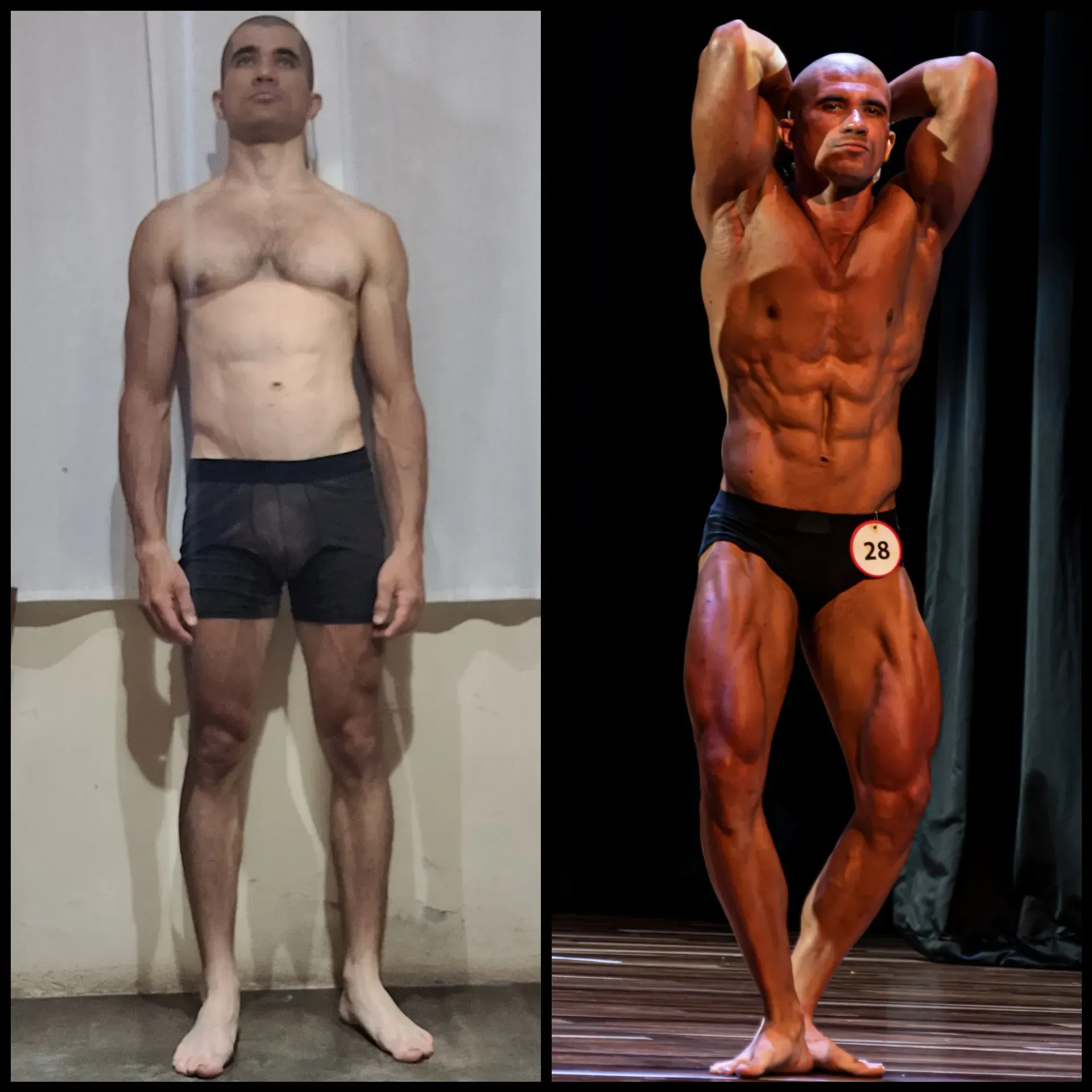
Muscle Mass Gain – Training Perspective
How Do You Train to Achieve Muscle Mass Gain?
Simple, there are 3 factors responsible for initiating the muscle growth process, and these must be present in training if you want to gain muscle:
The 3 Factors of Muscle Growth
- MECHANICAL TENSION: This means subjecting the muscle to overcome heavy loads.
- MUSCLE DAMAGE: The damage to the muscle myofibril (part of the cell).
- METABOLIC STRESS: The accumulation of byproducts of muscle contraction, for example the accumulation of lactic acid.
In Even Less Technical Words:
- Use heavy weight (of course with excellent technique).
- Achieve "breaking" the muscle (normally detectable by muscle soreness hours after exercise).
- Achieve "pumping the muscle" (muscle inflammation) at the time of training.
WHETHER WE ARE MEN OR WOMEN, these are the precursor factors (that initiate) the muscle growth process. Therefore, NOT ACHIEVING THESE STIMULI in our workouts means NOT GAINING MUSCLE — it's that simple. But if instead we manage to stimulate these 3 mechanisms, then we have WHAT'S NECESSARY TO INCREASE THE DESIRED MUSCLES.
Muscle Mass Gain – Nutritional Perspective
How Do You Eat to Achieve Muscle Mass Gain?
Although lean mass (LM) gains — meaning fat-free mass — have been reported in the literature during hypocaloric conditions, diets that focus primarily on LM gain are probably optimized through a sustained caloric surplus to facilitate anabolic processes and support increasing training demands.
The composition and magnitude of the caloric surplus, the inclusion of an exercise program, as well as the training status of the subjects can all influence the nature of the benefits.
Caloric Surplus Guidelines
- Larger caloric surpluses are more appropriate for untrained subjects who are prepared for more dramatic progress in LM gain, and for those with a high level of NEAT (Non-Exercise Activity Thermogenesis).
- Smaller caloric surpluses are appropriate for more advanced trainees who may be at higher risk for undue fat mass (FM) gain during aggressive hypercaloric conditions.
It should be noted that not all trainees will fit within this general framework. Some novices may require smaller surpluses, while some advanced trainees will require larger surpluses to drive muscle gains. It is the practitioner's job to adapt programs to the inevitable variability of individual response.
Key Takeaway
To gain muscle it's necessary to do the opposite of what's needed to lose fat — meaning to gain muscle we must consume more calories than we expend. Beginners can normally consume more calories than experienced people, since people with higher training levels tend to gain fat when they consume extra calories.
References
- Schoenfeld BJ. The Mechanisms of Muscle Hypertrophy and Their Application to Resistance Training. Journal of Strength and Conditioning Research. October 2010;24(10):2857-2872. View Source
- Aragon AA, Schoenfeld BJ, Wildman R, et al. International society of sports nutrition position stand: diets and body composition. Journal of the International Society of Sports Nutrition. 2017;14:16. View Source